

Third-Party Volume Verification: It’s Not About the Drone
Introduction
The rise of drone technology in construction has made it easier than ever to collect data on job sites. But when it comes to verifying earthwork volumes, the hardware is just the beginning. Third-party volume verification isn't about flying a drone... it's about what happens before, during, and after the data is collected. It takes a skilled, experienced professional to ensure the measurements are accurate, the comparisons are valid, and that communication between the contractor and project owner remains clear and proactive.
Why Experience Matters More Than Technology
Nearly anyone can fly a drone. But not everyone can interpret topographic data, understand the nuances of grading operations, and provide real answers to project stakeholders. Third-party volume verification is a discipline that requires far more than pushing a button and generating a report.
A qualified professional brings:
Contextual Understanding of site plans, grading tolerances, and construction sequencing
Field Awareness to identify environmental conditions, active work zones, and access constraints that can affect flight planning and data quality
Technical Knowledge of surface models, control points, and volumetric calculations
Without this depth of understanding, volume reports risk being incomplete, misleading, or simply... wrong.
The Drone is One of Many Tools
Establishing True Apples-to-Apples Comparisons
One of the biggest challenges in volume verification is ensuring that you're comparing the right data sets... and that they're processed consistently.
A true apples-to-apples comparison means:
Using consistent base surfaces — Whether comparing to original ground, sub-grade, or design surfaces, clarity and consistency are critical.
Controlling for time — Data must be timestamped and aligned with project phases to track actual progress, not just raw movement.
Processing with intent — Surface models need to be cleaned, checked, and adjusted based on known conditions. Blind reliance on software tools can introduce errors.
It’s easy to produce a flashy report. It’s much harder to produce a reliable one that will hold up under scrutiny from both contractor and owner.
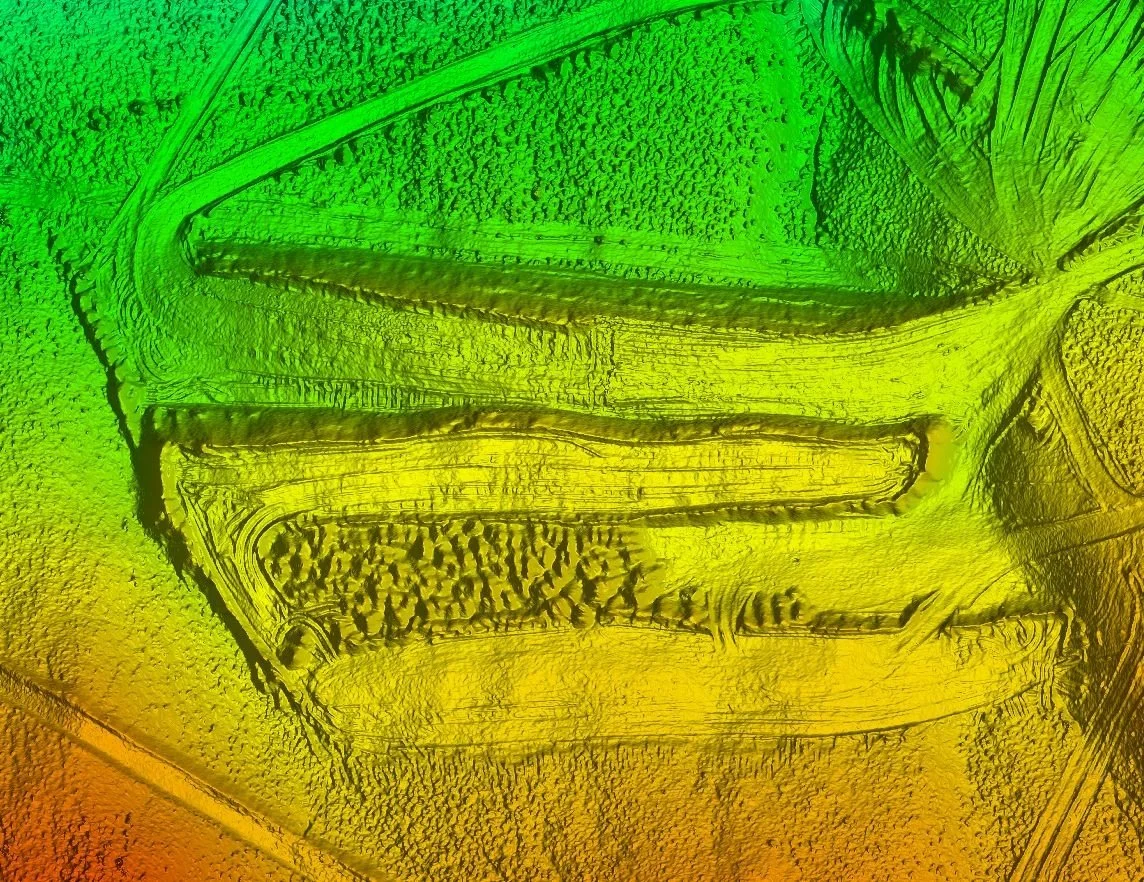
Stockpile
Timely, Transparent Communication is Key
Volume verification is not just a technical task... it’s a communication tool. The best professionals understand that their role includes:
Facilitating alignment between the grading contractor and the project owner
Delivering results quickly so they’re still relevant to ongoing decisions and more importantly, coincide with monthly billing
Explaining variances clearly, so that discrepancies don’t spiral into disputes
When discrepancies arise... and they often do... a seasoned professional can speak the language of both site superintendents, project managers, and engineers. They can mediate, clarify, and document the situation so that it’s resolved fairly and fast.
Conclusion: The Drone is a Tool, Not the Solution
While drones have revolutionized the way we collect site data, they don’t replace professional expertise. Third-party volume verification is ultimately about trust... trust that the measurements are right, that the comparisons are valid, and that the insights are delivered clearly and on time.
In short, don’t hire a drone. Hire a professional.